Brand: Honda
Country of Origin: Japan 🇯🇵
Founded: 1948
Industry: Automotive, Motorcycles, Mobility & Technology
Company: Honda Motor Co., Ltd.
Headquarters: Tokyo, Japan
President & CEO: Toshihiro Mibe
Official Website: Honda Official Website
Featured By: ASIA Best Brands — Asian Brands
About Honda
Honda is one of Japan’s most influential mobility companies, developing motorcycles, automobiles, power products and advanced mobility technologies.
Founded in 1948, Honda grew from a small motorcycle manufacturer in Hamamatsu into a global company whose engineering reaches from everyday transport to motorsports, aircraft and intelligent mobility.
From a Small Workshop to a Global Mobility Brand
Honda Motor Co., Ltd. was established by Soichiro Honda in September 1948, following the earlier Honda Technical Research Institute.
Its first complete motorcycle, the Dream D-Type, arrived in 1949. The launch of the Super Cub C100 in 1958 later became one of the most important milestones in Honda’s international expansion.
Honda entered the automobile business in 1963 and soon began competing internationally in motorsport, including Formula One.
This willingness to challenge established competitors became a defining part of Honda’s engineering culture.
A Global Motorcycle Leader

Honda soon coming up with self-balancing bike. Image Source: Malay Mail.
Motorcycles remain at the heart of Honda.
In May 2025, Honda reached 500 million units of cumulative global motorcycle production, 76 years after beginning mass production with the Dream D-Type. Its motorcycle manufacturing network now spans 23 countries and regions with annual production capacity exceeding 20 million units.
Asia is particularly important to this business.
Honda reported that Asian markets including India, Indonesia, Thailand and Vietnam accounted for around 85% of its global motorcycle sales in its fiscal 2025 outlook. India is now the world’s largest motorcycle market and a major centre for Honda production and sales.
Automobiles Built Around Engineering
Honda expanded from motorcycles into automobiles with a strong emphasis on efficient engines, practical design and driving performance.
Models such as the Civic, Accord, CR-V and HR-V helped establish the company internationally, while the Acura brand extended Honda into the premium segment.
Honda’s engineering history also includes technologies such as the CVCC engine, VTEC variable valve timing and hybrid-electric systems.
Rather than treating efficiency and driving enjoyment as separate goals, Honda has consistently worked to combine both within its vehicle development.
A Renewed Focus on Hybrid Technology
Honda is currently reshaping its automobile strategy as global demand for different powertrains continues to change.
In May 2026, Honda announced that it would allocate more resources toward hybrid vehicles while continuing longer-term development of EVs, intelligent technologies and all-solid-state batteries.
On October 9, 2026, the company introduced Honda Hybrid as the official name of its next-generation hybrid system.
Global rollout of vehicles using the new system will begin in 2027, with Honda planning 15 next-generation hybrid models by the end of the fiscal year ending March 2030.
This strategy allows Honda to respond to current demand while continuing toward its long-term goal of carbon neutrality.
Batteries and the Future of Electrification
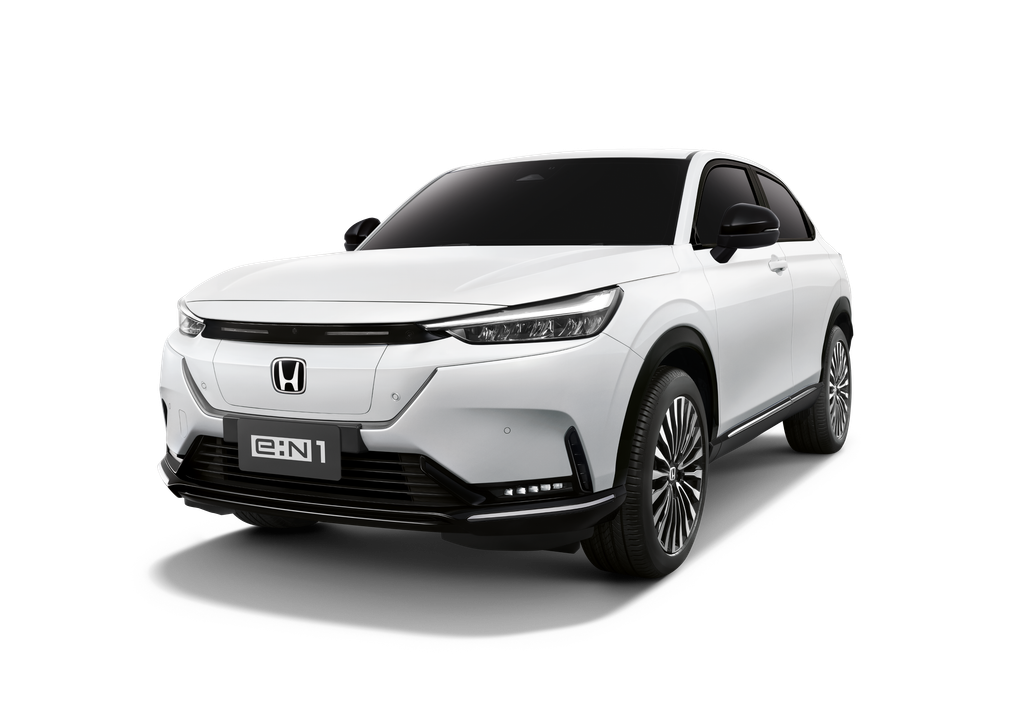
Honda e:N1, new Electric-Vehicle Car Model. Image Source: Honda.
Honda continues investing in next-generation electric-vehicle technology despite adjusting the pace of its EV expansion.
The company has built a demonstration production line in Japan for all-solid-state batteries, investing approximately ¥43 billion to develop manufacturing technologies for future electrified vehicles.
Honda expects all-solid-state batteries to offer advantages in energy density, range, weight and cost as the technology develops.
Its broader strategy now combines hybrid vehicles, EVs, carbon-neutral fuels and future battery technologies rather than relying on a single pathway toward decarbonisation.
Intelligent Mobility and ASIMO OS
Digital technology is also becoming increasingly important to Honda vehicles.
Honda is developing ASIMO OS, a vehicle operating system named after its famous humanoid robot. The platform is intended to support intelligent vehicle functions and personalised mobility experiences.
Honda has confirmed that intelligent technologies developed through ASIMO OS will ultimately extend beyond EVs into hybrid vehicles as well.
The company is also developing next-generation advanced driver-assistance systems, with deployment planned from 2028 across more than 15 models over five years.
More Than Cars and Motorcycles
Honda’s vision of mobility extends beyond road vehicles.
Through Honda Aircraft Company, the group developed the HondaJet, while future projects include the larger HondaJet Echelon.
Honda has also explored robotics, marine products, power equipment and new forms of mobility — reflecting the company’s long-standing belief that technology should expand people’s possibilities rather than remain limited to one product category.
This breadth makes Honda unusual among major automotive companies: motorcycles may be its origin and cars its most visible global business, but the brand continues to explore mobility across land, sea and air.
Asia at the Heart of Honda
Honda’s connection with Asia extends far beyond its Japanese origins.
For the fiscal year ended March 2026, Honda recorded approximately 11.31 million consolidated motorcycle unit sales in Asia, up 6.8% from the previous year. This figure excludes additional sales from its equity-method motorcycle operation in Indonesia.
Honda has major manufacturing and business operations across India, Indonesia, Thailand, Vietnam, China, Malaysia and other Asian markets, producing vehicles close to the customers who use them.
This local-production philosophy has been central to Honda’s international expansion for decades.
Scale and Transformation
Honda recorded approximately ¥21.8 trillion in consolidated sales revenue for the fiscal year ended March 31, 2026. Asia accounted for approximately ¥4.09 trillion in external-customer revenue.
The same year was also challenging: Honda recorded an operating loss following major charges associated with the reassessment of its automobile electrification strategy. The company is now restructuring its automobile business while relying on strong motorcycle operations and expanding hybrid demand to support future growth.
The strategy reflects a company responding to changing market conditions without abandoning its long-term investment in electrification and intelligent mobility.
Why Honda Is Featured on ASIA Best Brands
Honda represents one of Asia’s clearest examples of an engineering company growing from modest beginnings into a globally recognised mobility brand.
From the Dream D-Type and Super Cub to automobiles, hybrid technology, intelligent vehicles and aircraft, Honda has consistently expanded its interpretation of mobility.
Its extraordinary motorcycle scale and deep presence across India, Southeast Asia, China and Japan make Asia particularly central to the company’s identity and future.
By combining engineering, accessibility, mobility and continuous technological development, Honda remains one of the defining Japanese brands featured on ASIA Best Brands.
Official Website:
Honda Global Official Website
Category: Automotive | Motorcycles | Mobility | Technology
Tags: Honda, Honda Motor Co., Ltd., Japanese Automotive Brands, Honda Motorcycles, Honda Hybrid, Mobility Technology, Electrification, Super Cub, Asia, ASIA Best Brands
Sources
1. Honda — Official Website & Company Overview
Official corporate information covering Honda’s headquarters, leadership and major businesses.
Honda Company Overview
2. Honda — Company History
Official history covering Honda’s founding, motorcycles, automobiles and major technological milestones.
Honda History
3. Honda — 500 Million Motorcycles
Official information covering Honda’s 500 million-unit global motorcycle production milestone and worldwide manufacturing network.
Honda 500 Million Motorcycles
4. Honda — 2026 Business Strategy
Official information covering Honda’s current automobile strategy, hybrid expansion, EV development and intelligent technologies.
Honda 2026 Business Briefing
5. Honda — Next-Generation Honda Hybrid
Official October 2026 information covering Honda’s new hybrid system and global rollout beginning in 2027.
Honda Hybrid
6. Honda — All-Solid-State Battery Development
Official information covering Honda’s battery demonstration line and next-generation electrification technology.
Honda All-Solid-State Batteries
7. Honda — Fiscal 2026 Financial Results
Official information covering Honda’s revenue and business performance for the fiscal year ended March 2026.
Honda Financial Results
8. Honda Report 2026
Official integrated report covering Honda’s current transformation strategy, mobility businesses and future direction.
Honda Report 2026