
Brand: Hyundai
Country of Origin: South Korea 🇰🇷
Founded: 1967
Industry: Automotive, Mobility & Technology
Company: Hyundai Motor Company
Headquarters: Seoul, South Korea
President & CEO: José Muñoz
Official Website: Hyundai Official Website
Featured By: ASIA Best Brands — Asian Brands
About Hyundai
Hyundai is one of South Korea’s most internationally recognised automotive brands, producing passenger cars, SUVs, electric vehicles, hybrids and hydrogen fuel-cell vehicles.
Founded in 1967, Hyundai Motor Company has grown from a domestic automaker into a global mobility company operating in more than 200 countries. Its current strategy combines automobiles with electrification, software, artificial intelligence and future mobility technologies.
From South Korea to a Global Automotive Brand
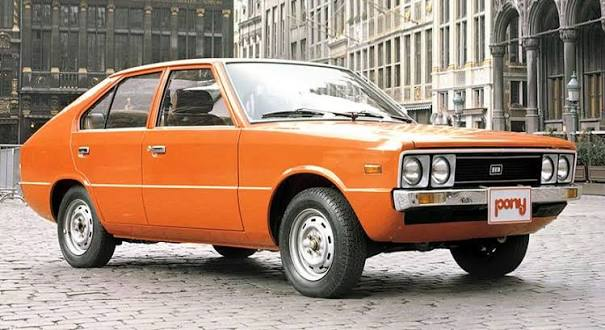
Hyundai Pony Car Model in 1976. Image Source: Hyundai.
Hyundai Motor Company was established in December 1967. Its Ulsan plant began producing the Ford Cortina the following year before Hyundai moved toward developing its own vehicles.
A major breakthrough came with the Pony in 1976, Hyundai’s first independently developed passenger car and an important step in the growth of South Korea’s automotive industry.
Models such as the Sonata, Elantra, Tucson and Santa Fe later helped establish Hyundai across international markets.
In 2024, Hyundai reached a significant milestone when cumulative global vehicle production surpassed 100 million units, achieved 57 years after the company was founded.
IONIQ and the Electric Mobility Transition
Electrification has become an important part of Hyundai’s modern identity.
The dedicated IONIQ family includes models such as the IONIQ 5, IONIQ 6 and IONIQ 9, combining electric powertrains with distinctive design and advanced charging technologies.
At the same time, Hyundai has adopted a flexible approach to electrification rather than focusing exclusively on battery-electric vehicles.
In 2025, Hyundai sold 961,812 electrified vehicles globally, including approximately 635,000 hybrids and 276,000 battery-electric vehicles. Hybrid sales grew particularly strongly as consumers in several markets sought alternatives between traditional combustion vehicles and full EVs.
Software-Defined Vehicles and AI

Hyundai Motor Group Redefines In-Vehicle Experience with ‘Pleos Connect’ Next-Generation Infotainment System. Image Source: Hyundai Motor Group.
Software is becoming increasingly important to Hyundai’s future vehicles.
In 2026, Hyundai Motor Group introduced Pleos Connect, its next-generation infotainment platform designed as an early step toward software-defined vehicles.
The system combines an open application ecosystem with navigation, over-the-air updates and Gleo AI, a generative-AI assistant designed for in-vehicle interaction. The Group aims to introduce Pleos Connect across approximately 20 million Hyundai, Kia and Genesis vehicles by 2030.
Hyundai Motor is also developing a broader data and AI ecosystem to support autonomous driving and continuously improving vehicle software.
Hydrogen as Another Mobility Path
Hyundai has invested in hydrogen fuel-cell technology for decades.
The company developed an early fuel-cell Santa Fe in 2000 and later introduced production models including the NEXO.
Rather than viewing hydrogen and battery-electric technology as direct alternatives, Hyundai continues to develop different powertrain solutions for different mobility needs, including passenger vehicles and commercial transportation.
Hyundai Motor Group is also developing wider hydrogen ecosystems involving production, storage, refuelling and commercial vehicles, including projects across Asia Pacific.
Beyond the Automobile
Hyundai increasingly describes its future around mobility rather than automobiles alone.
Through the wider Hyundai Motor Group, investments now extend into robotics, autonomous driving, artificial intelligence and software-defined manufacturing.
At CES 2026, the Group presented an AI robotics strategy involving Boston Dynamics and the Atlas humanoid robot, with plans to apply robotics across manufacturing before expanding into industries including logistics, energy and construction.
These projects illustrate how the Hyundai ecosystem is expanding from building vehicles toward developing technologies that connect mobility, automation and physical AI.
Asia at the Heart of Hyundai
Asia remains fundamental to Hyundai’s manufacturing, technology and growth strategy.
South Korea remains its home base, while India has developed into one of Hyundai’s most important international markets and manufacturing centres.
On October 13, 2026, Hyundai Motor Group announced plans to invest US$15.5 billion in India from 2026 to 2032, covering manufacturing expansion, research and development, local suppliers and future technologies.
Hyundai also operates significant businesses across markets including Indonesia, Singapore, Malaysia, Vietnam, Thailand and China, supporting both domestic demand and international production networks.
The company’s Asian roots therefore remain central even as Hyundai competes on a global scale.
Global Scale and Business Strength
Hyundai Motor Company recorded approximately 4.14 million wholesale vehicle sales in 2025.
Annual revenue reached a record KRW 186.3 trillion, an increase of 6.3% from 2024, while operating profit totalled KRW 11.47 trillion.
Momentum continued into 2026. In the second quarter, Hyundai recorded its highest-ever quarterly revenue of KRW 49.22 trillion, supported partly by strong hybrid demand and performance in North America.
These figures demonstrate the scale behind Hyundai as it balances its established automotive business with investment in electrification and digital technologies.
Why Hyundai Is Featured on ASIA Best Brands
Hyundai demonstrates how an Asian manufacturer can grow from relatively modest beginnings into a globally competitive mobility brand.
From the Pony and its first international exports to IONIQ electric vehicles, hybrid technology, hydrogen, software-defined vehicles and AI, Hyundai has continually expanded its technological capabilities.
Its deep roots in South Korea and growing investments across India and wider Asia also make the region fundamental to both its history and future.
By combining engineering, accessibility, design and future mobility technology, Hyundai remains one of the defining South Korean brands featured on ASIA Best Brands.
Official Website:
Hyundai Official Website
Category: Automotive | Mobility | Technology
Tags: Hyundai, Hyundai Motor Company, IONIQ, Electric Vehicles, Hybrid Vehicles, Hydrogen, Software-Defined Vehicles, Korean Automotive Brands, Hyundai Asia, ASIA Best Brands
Sources
1. Hyundai — Official Website
Official information covering Hyundai vehicles, mobility technologies and global operations.
Hyundai Worldwide
2. Hyundai — Company History
Official timeline covering Hyundai Motor Company’s founding, Pony and international development.
Hyundai History
3. Hyundai — 100 Million Vehicle Milestone
Official history covering Hyundai’s global cumulative production milestone.
Hyundai 100 Million Vehicles
4. Hyundai — 2025 Annual Business Results
Official information covering vehicle sales, record revenue and electrified-vehicle performance.
Hyundai 2025 Results
5. Hyundai — Q2 2026 Business Results
Latest available quarterly financial results covering revenue, hybrid sales and global performance.
Hyundai Q2 2026 Results
6. Hyundai — Pleos Connect and Software-Defined Vehicles
Official 2026 information covering Hyundai Motor Group’s next-generation vehicle software and Gleo AI.
Hyundai Pleos Connect
7. Hyundai — 2026 CEO Investor Day
Official information covering Hyundai Motor Company’s software, AI, autonomous-driving and future technology strategy.
Hyundai 2026 CEO Investor Day
8. Hyundai — India Investment Strategy
Official October 2026 announcement covering Hyundai Motor Group’s US$15.5 billion investment in India through 2032.
Hyundai India Investment